The Data Center Boom Is Reshaping Which Towns Grow
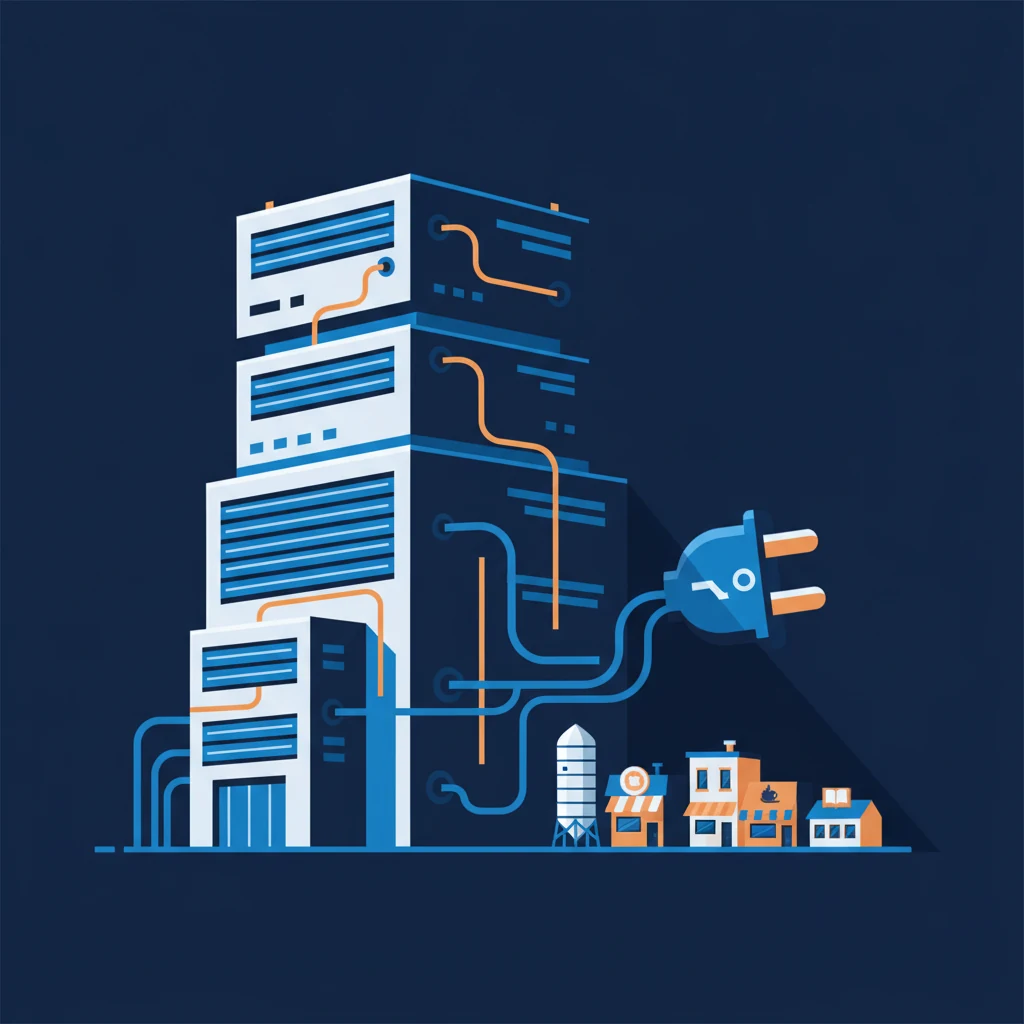
Richland Parish, Louisiana is cotton-and-soybean country — the kind of rural parish most Americans couldn't find on a map. Then Meta picked it for a data center campus it first announced at $10 billion, a number that has since climbed past $27 billion. To feed it, the local utility got the green light to build roughly 2,300 megawatts of brand-new power generation plus a dedicated substation — an entire power plant's worth of electricity, for one customer.
Overnight, one of the quietest corners of the state became one of the biggest construction sites in America. That's the pattern playing out in a handful of unglamorous counties right now. And if you're the type who watches for the next place to take off, it's worth understanding — because a data center boom looks nothing like the booms that came before it.
Here's the twist the "fastest-growing towns" lists won't tell you: for the people who already live there, a data center landing next door is not automatically good news.
The new boom map
The places getting picked aren't the trendy metros. They're rural counties with two things a hyperscaler cares about: cheap land, and — the real prize — access to a lot of electricity.
- Jasper County, Indiana. Amazon is pouring roughly $7 billion into a data center campus in tiny Wheatfield, right next to a retiring coal plant whose power hookup the region gets to reuse. The utility plans to build up to 3 gigawatts of new generation to serve it — with Amazon footing the bill. Old industrial bones, new tenant.
- New Albany, Ohio. One of the Midwest's biggest data-center clusters, just outside Columbus — and increasingly a flashpoint over who pays for the grid strain all those servers create.
- Homer City, Pennsylvania. A shuttered coal plant being rebuilt into a natural-gas complex of up to 4.5 gigawatts, largely to feed data centers. A dead town's power infrastructure, resurrected for the AI era.
Notice what these share: it wasn't the land that attracted the money. It was the power. In 2026, the scarcest thing in America isn't buildable acreage — it's a spot on the electrical grid big enough to plug in a small city's worth of computers. Land is easy. A 2,000-megawatt hookup is not.
Why the "boom" doesn't feel like one to locals
A gold rush brought thousands of permanent residents. An auto plant brought thousands of permanent jobs. A data center brings a couple of years of intense construction — and then a building that a few dozen people can run.
That's the catch, and it's a big one. A large campus employs somewhere around 800 to 1,200 workers during the 18-to-36-month build. Once the servers are humming, a 100-megawatt hyperscale facility typically supports only about 100 to 200 permanent jobs. Great for the county's property-tax base. Underwhelming if you were hoping the boom meant a hiring spree at your kid's high school.
Then there's the electric bill. All that new power capacity gets built, and somebody has to pay for it. The live worry in a lot of these communities is simple: will my rates go up so a trillion-dollar company can run its servers? It's a real enough concern that ratepayer costs are now one of the top reasons towns push back — and states are responding, from pulling data-center tax breaks to rewriting the rules on who shoulders the grid-upgrade tab.
So if you're eyeing a "boom" town
A data center boom is a genuine signal that money and infrastructure are flowing into a place, and that can lift a local economy in ways that outlast the servers. But it's the rare boom that can raise a county's tax base and its residents' electric bills at the same time — while adding almost no one to the schools or the housing market. That combination is exactly why it deserves a second look, not a reflexive cheer.
If you're weighing one of these places, look past the headline investment number and ask the boring questions:
- What happened to local wages and home values after construction wrapped — not during the build, when everything looks hot?
- What's happening to residential electricity rates? A new billion-dollar neighbor that drives up your power bill is a mixed blessing.
- Is the county fighting over the next project, or welcoming it? A zoning-board war is a signal about quality of life that no growth score captures.
The same instinct applies to any hot county: the growth that looks best on a spreadsheet isn't always the growth that's best to live inside of. It's why some of the safest, most livable places never top the raw-growth rankings at all — and why our own state and county pages pair momentum with affordability, safety, and home-value trends instead of a single hype number. A boom is a beginning of a question, not the answer to it.
Related reading: The Safest, Most Affordable Places Usually Aren't Boom Towns and 5 Signs a "Fastest-Growing" County Has Already Peaked.